Climbing Kilimanjaro the Sustainable Way: A Plant-Powered Journey to the Roof of Africa
If there’s one adventure that redefines the idea of sustainable travel, it’s the climb up Mount Kilimanjaro. Towering 5,895 metres above Tanzania’s plains, Kilimanjaro isn’t just Africa’s highest mountain — it’s a living ecosystem in motion, home to five distinct climate zones, from rainforest to glacial ice.
To climb Kilimanjaro responsibly is to move through that world with mindfulness — treading lightly, fuelling cleanly, and leaving nothing behind but footprints and gratitude. For a growing number of vegan and eco-minded travellers, it’s become the ultimate plant-powered pilgrimage: proof that strength, endurance, and ethics can climb side by side.
Climbing with Compassion
Every journey on Kilimanjaro begins with awareness. The mountain teaches respect — for altitude, for nature, and for the people who call it home. National park regulations require all climbers to travel with licensed guides and porters, creating vital employment for local communities.
Ethical operators like Team Kilimanjaro go further, ensuring fair wages, proper nutrition, and sustainable practices at every camp. They source ingredients locally, minimise packaging waste, and use reusable or biodegradable materials wherever possible. Many porters now carry solar-powered lamps, and climbers are encouraged to refill reusable bottles rather than rely on single-use plastics.
It’s a small revolution in responsible travel — one grounded in stewardship rather than consumption.
The Energy of Plants
One of the most common questions from vegan adventurers is whether it’s possible to thrive on a plant-based diet at altitude. The answer is a confident yes.
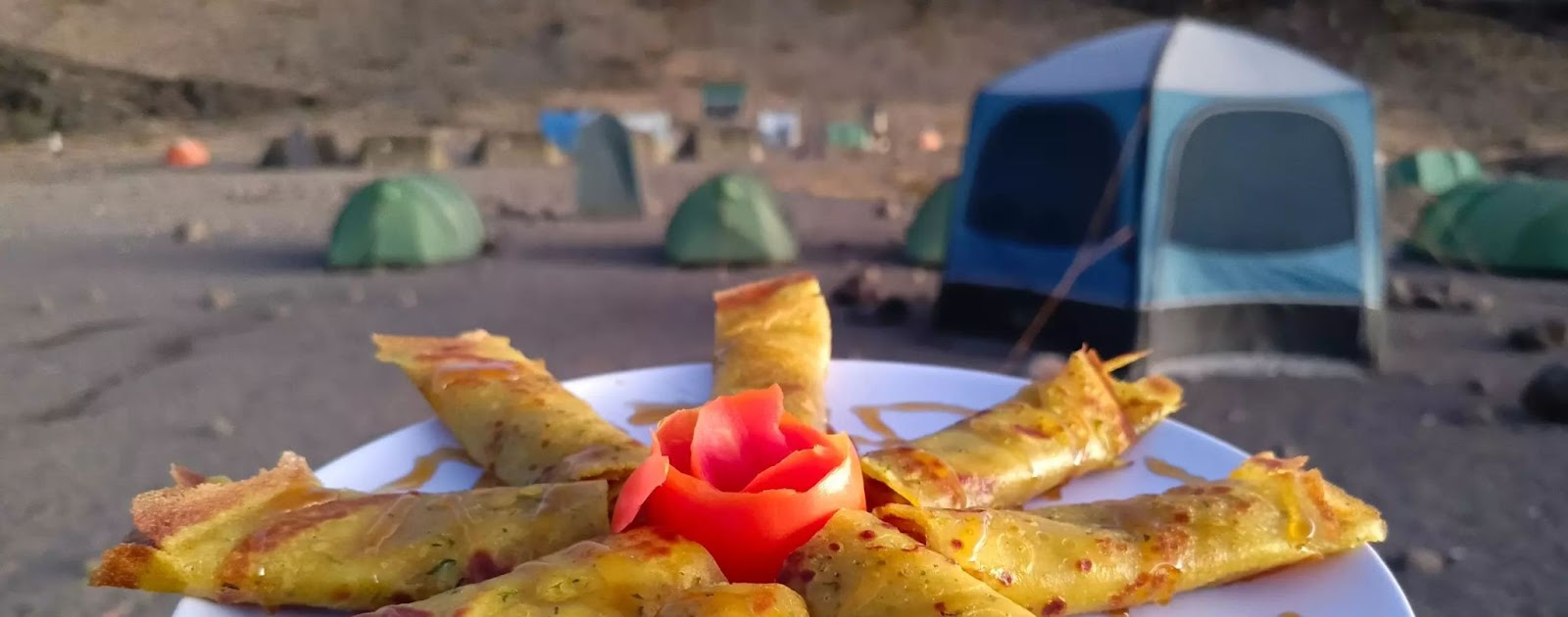
Around 70 percent of climbers on Team Kilimanjaro’s expeditions choose the Advantage Series, which includes balanced, nutrient-dense meals prepared fresh every day. For vegan climbers, menus are easily adapted: hearty soups with lentils and vegetables, energy-rich rice and beans, stews with chickpeas and coconut milk, and snacks of fruit, nuts, and oats.
The emphasis is on slow-release carbohydrates, whole grains, and plant-based protein that sustains endurance without heaviness. It’s clean fuel for a clean body — high in fibre, rich in minerals, and completely cruelty-free.
For those who prefer to carry their own supplies, the Superlite Series allows self-sufficiency — ideal for minimalists who travel with their own plant-based trail foods like nut butters, dehydrated hummus, or chia-seed puddings.
And at the top end, the Hemingway Series caters to those who want eco-luxury without compromise — full vegan menus with fresh produce brought up daily, proof that sustainability and comfort can coexist even at 4,000 metres.
The Journey in Stages
People often ask how long does it take to climb Kilimanjaro? While it can technically be completed in five days, the healthiest and most sustainable rhythm takes seven to nine.
This slower ascent protects both the environment and the climber. Rapid ascents lead to altitude sickness and excessive fatigue, while a measured pace allows the body to adapt naturally. The Swahili phrase pole pole — “slowly, slowly” — is the mantra of the mountain. It’s not just a safety rule; it’s a way of travelling ethically, with respect for every living thing around you.
The TK Lemosho Route — Team Kilimanjaro’s signature trail — embodies this philosophy. It avoids the congested sections of Machame and Umbwe, which suffer from erosion and overcrowding, and instead takes a quiet, scenic line through pristine moorlands and open plateaus. It’s efficient too, eliminating a needless 401-metre ascent that is immediately lost into Karanga Valley on other routes.
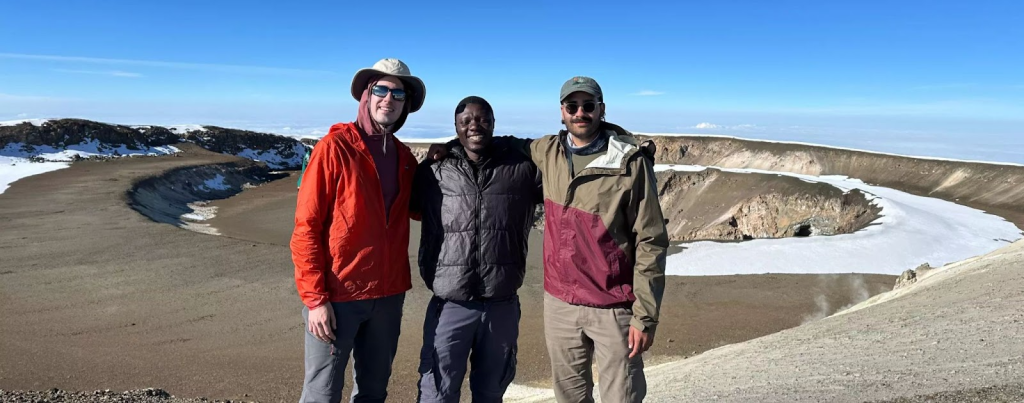
For the truly intrepid, the Excel Extension adds a night inside the crater at 5,729 metres — a rare and humbling encounter with the elements at their purest.
The Seasons of Light
The best time to climb Kilimanjaro is during the dry seasons — January to March and June to October — when the skies are clear, trails stable, and visibility at its most breathtaking.
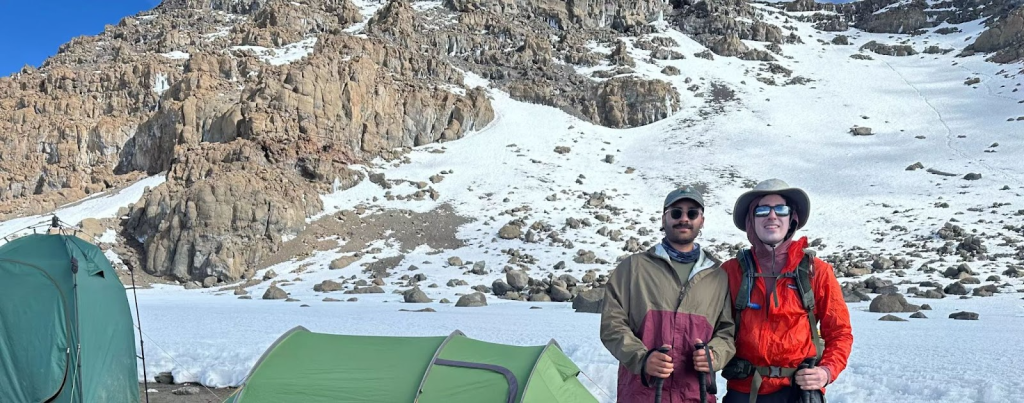
Yet some eco-climbers prefer the quiet rains of April to May and November. The forest is lush, the waterfalls full, and the trails empty. Yes, it’s muddier and colder, but it’s also more alive. In these months, the climb feels less like a conquest and more like communion.
Whether in sunshine or mist, Kilimanjaro reminds you that the planet’s beauty doesn’t belong to us — it’s borrowed, briefly, on the way up and given back on the way down.
Summit Night: The Purest Energy
The final ascent begins at midnight. Climbers rise under starlight, sustained by warm drinks and quiet determination. The air is thin and cold; breath and heartbeat become meditation.
Step by step, the world transforms. At dawn, the sky ignites over the glaciers. The sign at Uhuru Peak — “freedom” in Swahili — marks the highest point in Africa.
No engines, no noise, no pollution — only the sound of wind and the steady rhythm of human breath. It is the most elemental moment of all: proof that with compassion, patience, and pure energy, the human body can do extraordinary things.
A Gentle Descent
After the summit, climbers descend to thicker air, the scent of forest returning on the breeze. Many celebrate with fresh fruit and coconut water in Moshi town below, or extend the journey with a safari through the Serengeti or time on Zanzibar’s beaches.
But the true reward is inward. Vegan climbers often describe the experience as a kind of renewal — an affirmation that living gently and living fully can be the same thing.
The Meaning of a Sustainable Summit
To Kilimanjaro veterans, the mountain’s message is clear: progress and compassion don’t need to compete. By eating plant-based, travelling mindfully, and respecting the ecosystems that sustain us, adventure becomes an act of stewardship.
Climbing slowly, eating kindly, leaving nothing behind — these are not restrictions; they’re freedoms. They remind us that endurance is cleanest when it’s conscious, and that the greatest summit is not the mountain itself, but the renewed respect for life that waits at the top.
Keep an eye for more latest news & updates on Veganov Trichy!